
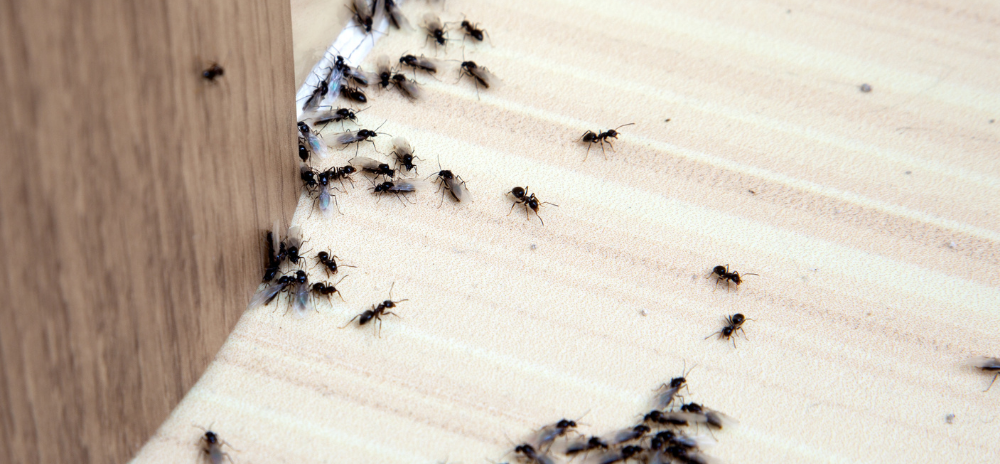
If you have lived in Dallas or Fort Worth for more than a summer, you know exactly what fire ant mounds look like. That distinctive dome-shaped mound in the lawn, no entry hole on top, and red-brown ants that swarm without warning the moment anything disturbs them. Fire ants are not just a nuisance.
They are a legitimate public health threat in North Texas, responsible for tens of thousands of sting incidents each year, occasional severe allergic reactions requiring emergency care, and significant damage to lawns, gardens, and electrical equipment. DFW’s warm climate and clay-rich soils make it one of the most fire ant-dense regions in the United States.
This guide covers how to correctly identify fire ants, why store-bought treatments consistently fail, what the Texas A&M recommended approach actually involves, and when a property-wide professional treatment becomes the right call.
Key Takeaways
- Fire ants arrived in Texas in the 1950s and have spread across every county in the state. DFW’s warm climate allows year-round colony activity with no winter die-off.
- A fire ant colony can contain 200,000 to 500,000 workers and multiple queens. Killing surface workers without reaching the queen guarantees the colony will rebuild.
- The Texas A&M AgriLife Extension recommends the Two-Step Method: broadcast bait across the entire property, then treat individual mounds with a fast-acting product.
- Individual mound treatments using products like boiling water, granules, or liquid drenches provide fast results but do not prevent new mounds from forming in untreated areas.
- Fire ants pose risks beyond sting pain. They can damage HVAC equipment, chew through irrigation lines, and cause severe anaphylactic reactions in sensitive individuals.
Why Fire Ants Are Such a Problem in the DFW Area
Fire ants were introduced to the United States through the port of Mobile, Alabama from South America around the 1930s and reached Texas by the 1950s. They have since spread to every county in the state, thriving particularly in the warm, moist soil conditions found across Dallas County and Tarrant County. Unlike many pest species that struggle through DFW winters, fire ants remain active year-round. Colonies simply move deeper into the soil during cold snaps and resurface when temperatures rise. There is no winter die-off to reduce populations the way there is in northern states.
A single fire ant colony is a substantial organism. Mature colonies contain 200,000 to 500,000 workers, depending on age and species, and in Texas it is common to encounter colonies with multiple queens, which makes eradication considerably more difficult. The ants forage up to 100 feet from their mound, meaning a mound in the far corner of a yard can still threaten children and pets near the house. They are also attracted to electrical equipment, frequently nesting in junction boxes, air conditioning units, and irrigation control systems, causing significant damage over time.
How to Identify Fire Ant Mounds
Correct identification is the first step toward effective treatment. Several ant species build ground mounds in DFW, and the treatment approach differs between species. Fire ant mounds are identifiable by several specific characteristics.
- Dome shape with no visible entry hole: Fire ants enter and exit through underground tunnels that surface several inches away from the mound. The dome itself has no opening on top, which distinguishes it from other mounding ant species.
- Reddish-brown color: Fire ants are smaller than carpenter ants and have a distinctive reddish-brown coloration, darker at the abdomen. Workers come in several sizes within the same colony.
- Aggressive swarming behavior: Disturbing a fire ant mound even slightly triggers an immediate swarm response. Hundreds of workers emerge within seconds. This rapid mobilization distinguishes fire ants from the slower-reacting native ant species found in DFW.
- The sting: Fire ant stings produce an immediate burning sensation, followed within 24 hours by a white pustule at the sting site. The pustule is a hallmark reaction unique to fire ant venom and helps confirm identification after the fact.
Why DIY Fire Ant Treatments Keep Failing
Hardware stores in Dallas and Fort Worth carry a wide range of fire ant products, and most homeowners have tried at least a few of them. The frustrating reality is that most over-the-counter treatments fail for predictable, structural reasons.
Mound-Only Treatments Miss the Colony
Products that are applied directly to the mound, whether granules, dust, or liquid drenches, are effective at killing the workers present in and around the mound at the time of application. The problem is that a mature fire ant colony extends deep into the soil in a network of tunnels that can reach three to four feet underground.
The queen or queens are typically in the deepest chambers. When a mound-only treatment is applied, workers in the outer mound die. The queen, protected in the deep chambers, survives. The colony rebuilds, often relocating the mound a short distance away within two to three weeks.
Repellent Products Scatter Colonies
Some fire ant sprays and granule products use repellent chemistry that causes ants to abandon the treated area. This produces fast visible results, but the colony simply relocates to another part of the yard or to neighboring properties. The total ant population on the property is not reduced. Homeowners who use repellent products often find that mounds reappear in a different area of the yard within weeks.
Weather and Timing Issues
Fire ant baits work by having foraging workers carry the slow-acting bait back to the colony, where it is distributed and eventually reaches the queen. For this process to work, bait must be applied when workers are actively foraging. In very hot weather above 95°F, fire ants forage primarily in the early morning and late evening. Bait applied during peak afternoon heat in a DFW summer will sit on the lawn without being collected. Many homeowners apply bait at the wrong time of day and conclude that it does not work.
The Texas A&M Two-Step Method Explained
Texas A&M AgriLife Extension is the authoritative source on fire ant management in Texas. Their recommended approach for heavily infested properties is called the Two-Step Method. This approach is described in detail in fire ant identification and control resources and is considered the most cost-effective and comprehensive strategy for property-wide management.
Step 1: Broadcast Bait
Apply a slow-acting granular bait product across the entire lawn using a hand-held spreader. Do not apply bait only to visible mounds. The goal is to treat the entire foraging area, including areas with no visible mounds, since colonies send workers across the full lawn. Use a fresh bait product and apply when ants are actively foraging. In DFW, late afternoon applications in spring and fall tend to produce the best results. Re-apply the bait once or twice per year.
Step 2: Treat Individual Problem Mounds
After broadcasting bait, treat individual mounds that present immediate risks, particularly any mounds near play areas, entryways, HVAC equipment, or irrigation systems. Individual mound treatments include liquid drenches, which provide rapid elimination of surface workers; granule products applied directly to the mound; or contact sprays. Individual mound treatment provides fast visible results while the broadcast bait works more slowly to reduce the overall population across the property.
What Professional Fire Ant Treatment Looks Like
For properties with severe infestations or where recurring DIY attempts have not produced lasting results, professional treatment provides advantages that over-the-counter products cannot.
- Professional-grade broadcast products: Licensed pest control professionals in Texas have access to formulations not available to consumers, including products with longer residual protection and higher efficacy against multiple-queen colonies.
- Correct application timing and rate: Bait application rate and timing are critical. Professionals calibrate spreader settings for the specific product being used and can time applications around DFW’s seasonal heat patterns for maximum foraging activity.
- Whole-property assessment: A professional inspection identifies conducive conditions, including moisture sources and soil characteristics, that allow fire ant populations to rebuild quickly after treatment. Addressing these conditions alongside treatment produces more durable results.
- Follow-up service: Fire ant management typically requires follow-up applications. A professional service plan includes scheduled return visits aligned with the seasonal fire ant activity cycle in North Texas.
Fire Ant Risks Beyond the Sting
Most people think of fire ant stings as the primary hazard, but the risks extend further, especially for DFW homeowners.
- Allergic reactions: Approximately three percent of the population has a severe allergic reaction to fire ant venom. Anaphylactic reactions to fire ant stings are a documented medical emergency in Texas and require immediate treatment with epinephrine.
- Equipment damage: Fire ants are strongly attracted to electrical fields. They nest in air conditioning compressors, junction boxes, irrigation controllers, and landscape lighting systems. Nest buildup inside electrical equipment causes short circuits, equipment failure, and fire risk.
- Agricultural and garden damage: Fire ants kill seedlings, damage root systems, and feed on fruit and vegetables. They also protect aphids and other plant-damaging insects from predators, allowing secondary pest problems to develop in gardens and landscaping.
- Pet and livestock risk: Small pets, young animals, and animals confined to outdoor enclosures are particularly vulnerable. Fire ant attacks on confined pets and newborn livestock are reported regularly across North Texas.
For information on ant identification and control options across the full Dallas-Fort Worth area, visit pestcontrolprosdallas.com.
Frequently Asked Questions
What is the best way to kill fire ants in a Dallas yard?
The Texas A&M Two-Step Method works best: broadcast bait across the entire yard, then treat individual mounds with a fast-acting drench. Apply bait in mild weather when ants are actively foraging.
When is fire ant season in Dallas-Fort Worth?
Fire ants are active year-round in DFW but most aggressive March through October. Late summer and early fall are peak mound-building periods across Tarrant and Dallas counties.
Why do fire ant mounds keep returning after treatment?
DIY products kill surface workers but miss the queen underground. Without eliminating the queen, the colony rebuilds in weeks. Bait that reaches the queen is essential for lasting fire ant control.
Are fire ants dangerous to pets in Texas?
Yes. Fire ants swarm and sting repeatedly when disturbed. Pets that step on a mound can receive dozens of stings rapidly. Young and small animals are especially vulnerable to severe reactions.
How do I tell fire ants apart from regular ants in my yard?
Fire ant mounds are dome-shaped with no visible entry hole on top. The ants are reddish-brown and swarm aggressively when disturbed. Stings produce burning and white pustules appear within 24 hours.
Stop Treating Symptoms and Eliminate the Colony
Fire ant management in DFW is a long-term commitment, not a one-time treatment. The most effective approach combines broadcast bait applied at the right time with targeted individual mound treatment and follow-up service on the seasonal schedule that matches North Texas fire ant activity patterns.
For same-day and scheduled fire ant control service in Dallas, Fort Worth, and surrounding DFW communities, visit pest control services in Dallas-Fort Worth.